
The Evolution of Taxation in Nigeria: From Pre-Colonial Era to 2026
Understanding the current tax landscape in Nigeria requires a deep dive into its historical evolution. Taxation is not a new concept in the region; it has roots in pre-colonial systems of tribute and community contributions.
Pre-Colonial Systems
Before British colonization, various kingdoms and ethnic groups had established systems of taxation. In the Northern Emirates, the Zakat and Jizya systems were derived from Islamic law, focusing on agricultural produce and property. In the Southern kingdoms, such as the Oyo Empire and the Benin Kingdom, tributes were paid to the monarchs (Alaafin and Oba) in the form of labor, food items, and trade goods. These systems were essential for maintaining community infrastructure and defense.
The Colonial Influence and the 1904 Proclamation
The modern tax system began to take shape with the arrival of the British. In 1904, Lord Lugard introduced the Native Revenue Proclamation in Northern Nigeria, which sought to formalize the existing tribute systems into a structured tax regime. This was later expanded to the South through the Native Revenue Ordinance of 1917. This era marked the transition from tributes in kind to taxes in cash—specifically the British Pound.
The Raisman Commission and Federalism
As Nigeria moved toward independence, the 1958 Jeremy Raisman Commission played a pivot role in defining the fiscal relationship between the federal government and the regions. It established the principle of tax jurisdiction that still governs us today: the Federal Government handles corporate taxes (CIT), while State Governments handle personal taxes (PIT).
The Modern Era: PITA 1993 and CITA 2004
Post-independence, the tax laws were further refined. The Personal Income Tax Act (PITA) of 1993 codified how individuals are taxed, introducing the concept of the residency rule. The Company Income Tax Act (CITA) of 2004 (as amended) became the bedrock for corporate taxation.
The Finance Act Revolution (2019-2026)
Since 2019, Nigeria has witnessed an unprecedented pace of tax reform through annual Finance Acts. These laws have modernized our system for the digital age:
- SME Exemptions: Small businesses with turnover below ₦25 million were exempted from CIT to encourage growth.
- VAT Increase: The VAT rate was moved from 5% to 7.5% and later adjusted in subsequent acts.
- Electronic Money Transfer Levy (EMTL): A ₦50 levy was introduced on electronic transfers to capture revenue from the growing digital payment space.
- Digital Economy Taxation: New rules ensure that "Significant Economic Presence" (SEP) by global tech firms (Google, Netflix, Meta) is captured within the Nigerian tax net.
Taxation in 2026: The Digital Shift
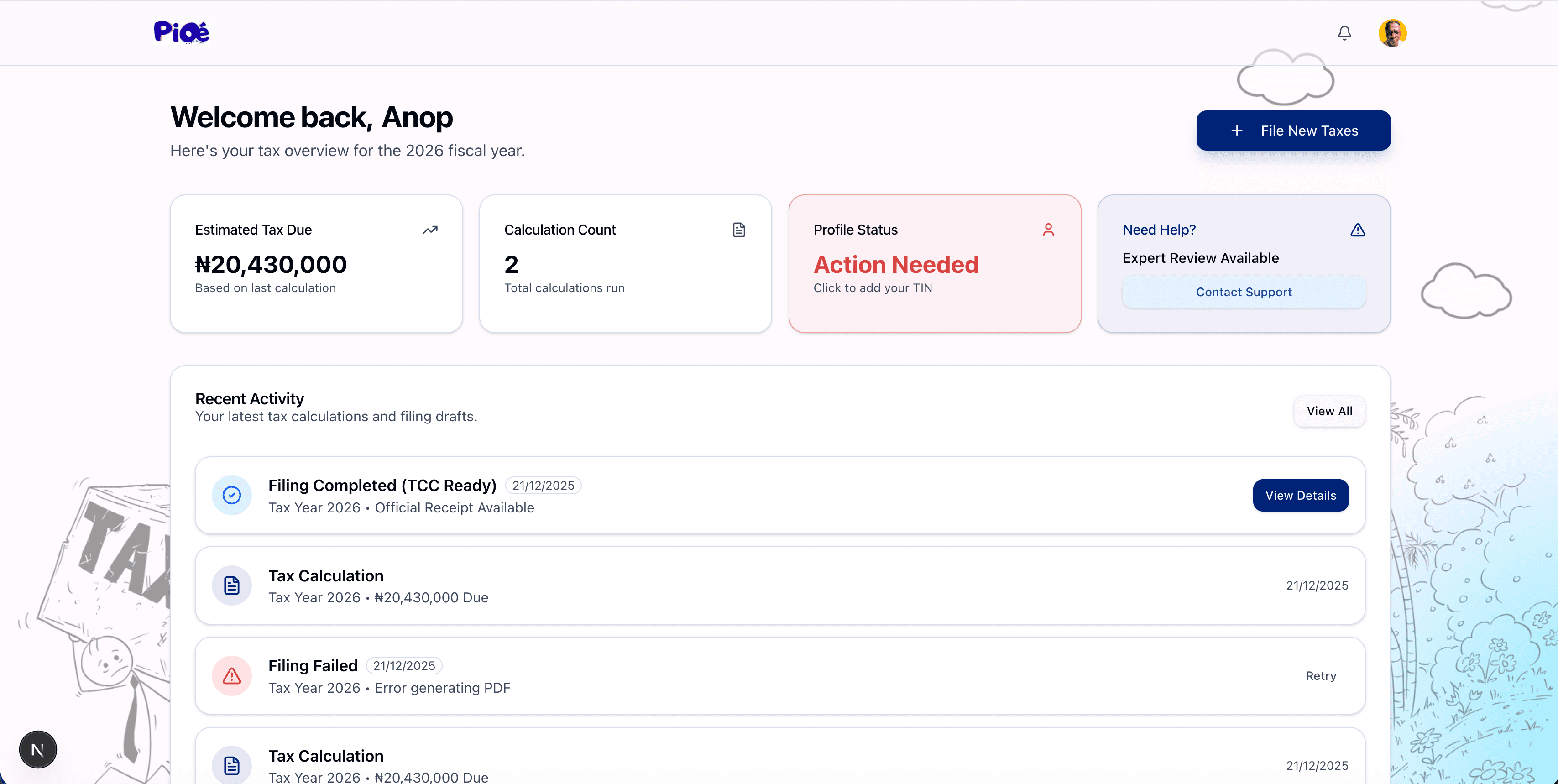
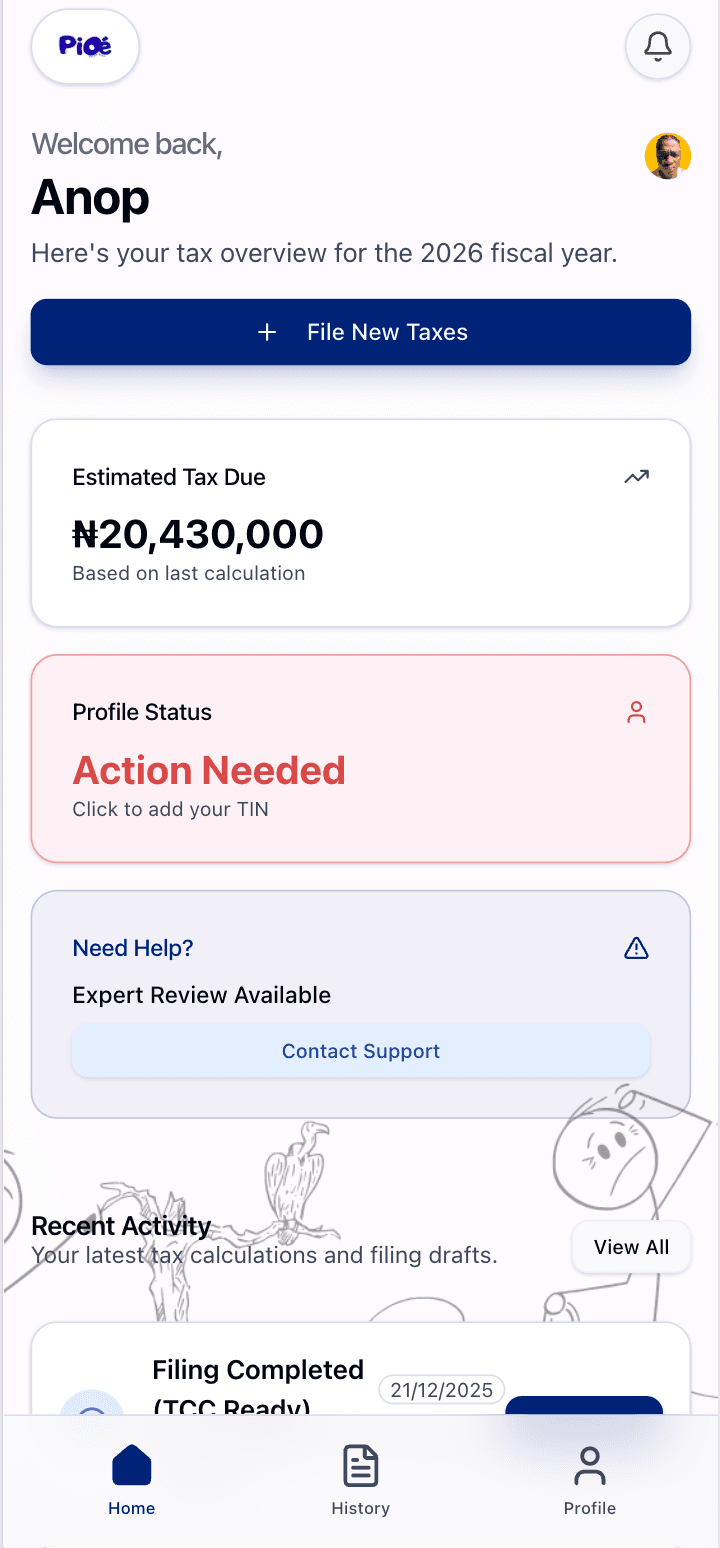
As we enter 2026, the focus of the FIRS and State IRS bodies has shifted toward data-driven enforcement. Integration between the NIN (National Identity Number), BVN (Bank Verification Number), and TIN (Tax Identification Number) means that non-compliance is easily detected. Blackgoat (Pioe) sits at the center of this digital shift, providing the bridge between the taxpayer and the government's automated systems.
Content freshness reference: April 2026
Complete Guide to Filing Taxes in All 36 States of Nigeria
No matter where you reside or operate your business, Pioe connects you directly to the relevant State Internal Revenue Service.
1. Abia State (ABIRS)
Capital: Umuahia. Commercial Hub: Aba.
Format of TIN: JTB-TIN. Residents of Aba and Umuahia can file Direct Assessment online. Key taxes: Development Levy, Business Premises Registration in Aba North/South. Payment channels: Remita, E-Tranzact.
2. Adamawa State (ADIRS)
Capital: Yola.
Filing for cattle tax and agricultural produce grading fees. PAYE remittance for organizations in Jimeta and Yola North. Online Portal: Adtax.
3. Akwa Ibom State (AKIRS)
Capital: Uyo. Oil & Gas Hub.
Strong enforcement on WHT for oil services contracts. Residents in Eket and Ikot Ekpene must ensure full PAYE compliance to avoid prosecution. Uses a unique ID system alongside JTB TIN.
4. Anambra State (AIRS)
Capital: Awka. Commercial Hub: Onitsha.
Traders in Onitsha Main Market are subject to Presumptive Tax regimes tailored for the informal sector. AIRS digital platform integration available. Taxes commonly paid: Market Stall Fees, Sanitation Levy.
5. Bauchi State (BASBIR)
Capital: Bauchi.
Compliance focus on WHT from government contracts and PAYE from federal institutions located in the state. Major agricultural levies apply.
6. Bayelsa State (BYSBIR)
Capital: Yenagoa.
Heavy reliance on PAYE from oil & gas multinationals. Personal Income Tax filing for expatriates and residents. Environmental Development Levy is strictly enforced.
7. Benue State (BIRS)
Capital: Makurdi.
Agricultural produce tax and market taxes are key. Direct Assessment for farmers and traders in Gboko and Otukpo.
8. Borno State (BSBIR)
Capital: Maiduguri.
Special tax considerations for humanitarian NGOs operating in the region regarding PAYE for local staff. Development levy collection is active in safe zones.
9. Cross River State (CRIRS)
Capital: Calabar.
Tourism Development Levy and Hotel Occupancy Tax are prominent. Filing deadline: March 31st. Compliance required for Carnival-related businesses.
10. Delta State (DSIRS)
Capital: Asaba. Cities: Warri, Agbor.
One of the most advanced digital portals. Strict enforcement on PAYE for oil companies in Warri. Contractor WHT audit is frequent.
11. Ebonyi State (EBSBIR)
Capital: Abakaliki.
Rice millers and quarry operators in the state are subject to specific haulage and direct assessment taxes. E-receipting is mandatory.
12. Edo State (EIRS)
Capital: Benin City.
EIRS is aggressive on consumption tax for hotels and event centers. Ensure monthly filing of consumption tax alongside PAYE. Use of ERAS (Edo Revenue Administration System) is standard.
13. Ekiti State (EKIRS)
Capital: Ado Ekiti.
Land Use Charge and Direct Assessment for professionals (lawyers, doctors) practicing in Ado Ekiti. Hotel consumption tax law in effect.
14. Enugu State (ESBIR)
Capital: Enugu.
ESBIR monitors rent collection WHT aggresively. Landlords in Independence Layout and GRA must remit 10% WHT on rent. Pay-Direct system used for collection.
15. Gombe State (GSBIR)
Capital: Gombe.
Focus on informal sector presumptive tax for traders in Gombe Main Market.
16. Imo State (IIRS)
Capital: Owerri.
Hospitality tax is key in Owerri. IIRS requires digital filing for Tax Clearance Certificates. Frequent audits on WHT from construction contracts.
17. Jigawa State (JSBIR)
Capital: Dutse.
Agro-allied processing taxes. Payroll tax for state and LGA employees. Date palm tax provisions.
18. Kaduna State (KADIRS)
Capital: Kaduna.
KADIRS has a robust digital platform. Property tax (Land Use Charge) is consolidated with Ground Rent. PAYE filing is mandatory for all employers. Enforcement teams active in Kaduna North/South.
19. Kano State (KIRS)
Capital: Kano.
High volume of informal sector traders. Presumptive tax regime is active. KIRS enforces WHT on contracts awarded by state agencies. Consumption tax on Shisha bars and restaurants.
20. Katsina State (KTBIR)
Capital: Katsina.
Direct assessment for border trade activities. Returns due by March 31st.
21. Kebbi State (KSBIR)
Capital: Birnin Kebbi.
Rice farming value chain taxation. Market taxes levied by LGAs but supervised by KSBIR.
22. Kogi State (KGIRS)
Capital: Lokoja.
Industrial tax hub (Ajaokuta/Obajana). Cement haulage levies and WHT on transport contracts. Right of Way levies for telcos.
23. Kwara State (KWIRS)
Capital: Ilorin.
KWIRS operates a unified payment platform. Community development levies and personal income tax.
Capital: Ikeja. Key Areas: Lekki, VI, Ikoyi, Yaba.
LIRS eTax portal is the most sophisticated in Nigeria.Key Requirements:Every resident must file 'Form A' annually. Employers must file 'Form H1' (Annual Returns) by Jan 31st. Consumption Tax (HRMC) applies to hotels at 5%. Pioe has direct integration for TCC generation from LIRS.
25. Nasarawa State (NSBIR)
Capital: Lafia. Proximity to Abuja (Karu/Mararaba).
Many Abuja workers live in Nasarawa; technically liable to pay tax to NSBIR under the Residency Rule. Significant PAYE base Commuters.
26. Niger State (NGSBIR)
Capital: Minna.
Hydro-electric power host communities taxes. Agricultural direct assessment.
27. Ogun State (OGIRS)
Capital: Abeokuta. Industrial Hub (Ota/Agbara).
Huge industrial base. OGIRS focuses on WHT from manufacturing vendors and PAYE from factory workers. Residency rule disputes with Lagos are common.
28. Ondo State (ODIRS)
Capital: Akure.
Cocoa producing areas tax. Consumption tax on hotels and event centers.
29. Osun State (OIRS)
Capital: Osogbo.
Education levy and development levies. Direct Assessment for artisans and traders. Stone quarrying taxation.
30. Oyo State (OYIRS)
Capital: Ibadan.
Pace Setter tax portal. Compliance focus on the expanded Ibadan metropolis. Land Use Charge is a major revenue driver.
31. Plateau State (PSIRS)
Capital: Jos.
Mining and tourism taxation. PSIRS monitors compliance for mining leases and WHT on mineral haulage.
32. Rivers State (RIRS)
Capital: Port Harcourt.
Second largest economy. RIVTAMIS portal. Aggressive collection of Social Services Contributory Levy and WHT on oil services. Expatriate taxation is high priority.
33. Sokoto State (SSIRS)
Capital: Sokoto.
Cattle tax (Jangali) and market levies. Direct assessment for traders.
34. Taraba State (TSBIR)
Capital: Jalingo.
Timber hauling fees and agricultural produce tax.
35. Yobe State (YSBIR)
Capital: Damaturu.
Livestock tax and market development levies.
36. Zamfara State (ZSBIR)
Capital: Gusau.
Gold mining (artisanal) taxation issues and agricultural levies.
HQ: Abuja.
FCT-IRS manages tax for all residents of Abuja. Uniquely, they use the FIRS portal infrastructure but operate independently. High compliance enforcement on federal civil servants and diplomats. Filing deadline: March 31st.